If you are thinking about buying a rental property in Delphi, it can be tempting to focus on one number and call it a day. A low purchase price, a decent rent estimate, or a vacancy stat can look promising on the surface. But in a small market like Delphi, the real opportunity usually shows up when you look closer at housing type, age, true supply, and ongoing costs. Let’s dive in.
Why Delphi draws investor interest
Delphi sits in a housing market that is smaller, more owner-occupied, and more single-family oriented than many larger Indiana communities. In ZIP code 46923, public data shows 3,691 housing units, with 80.2% owner occupied and 19.8% renter occupied in 2024. That matters because you are not evaluating a dense apartment market. You are looking at a place where many rental opportunities are likely to be houses, duplexes, or smaller buildings.
Carroll County shows a similar pattern. County QuickFacts report 82.2% owner-occupied housing, median gross rent of $890, and a median owner-occupied home value of $180,900 in the 2020 through 2024 ACS period. Compared with Indiana overall, the county is less renter-heavy, which can make Delphi feel more stable but also more limited in available rental inventory.
What local rent numbers suggest
A good starting point is local rent. In ZIP code 46923, median gross rent reached $947 in 2024, up from $593 in 2011. Over that same period, median home value increased from $100,900 to $170,600, which shows that both rents and values have moved up over time.
That does not automatically make every deal work. It does mean you should underwrite with current numbers instead of relying on old assumptions about what a Delphi rental “should” cost or rent for. Even in a smaller market, pricing has changed meaningfully.
Another useful data point is affordability. In ZIP code 46923, median gross rent is roughly 17.9% of median household income, while Carroll County’s median gross rent is about 16.3% of median household income. That suggests local median rents are not extreme relative to local incomes, though every renter and every property will be different.
Why headline vacancy can be misleading
Vacancy is one of the easiest numbers to misread in a market like Delphi. ZIP code 46923 shows an overall vacancy rate of 12.44%, which is higher than Indiana’s 9.20% on the same source. At first glance, that can make the market look oversupplied.
But that headline number does not tell you how many rent-ready homes are actually competing for tenants. A regional housing study found Carroll County’s overall vacancy rate was 14.3% in 2020, yet only about 2.6% of units were vacant for sale or rent. More than half of vacant units were seasonal, recreational, or occasional use, and another 20.5% were classified as other vacant.
The practical takeaway is simple: do not assume a high vacancy rate means weak rental demand. In Delphi, it can overstate the amount of active rental competition. If you are evaluating a property, it is smarter to verify current rental listings, compare nearby asking rents, and look at how long similar units stay on the market.
Property types shape your strategy
Delphi’s housing stock leans heavily toward detached homes. Local housing data shows 874 detached single-family units out of 1,222 total housing units. By comparison, there are only 61 two-unit structures, 25 three- or four-unit structures, and 25 structures with 20 or more units.
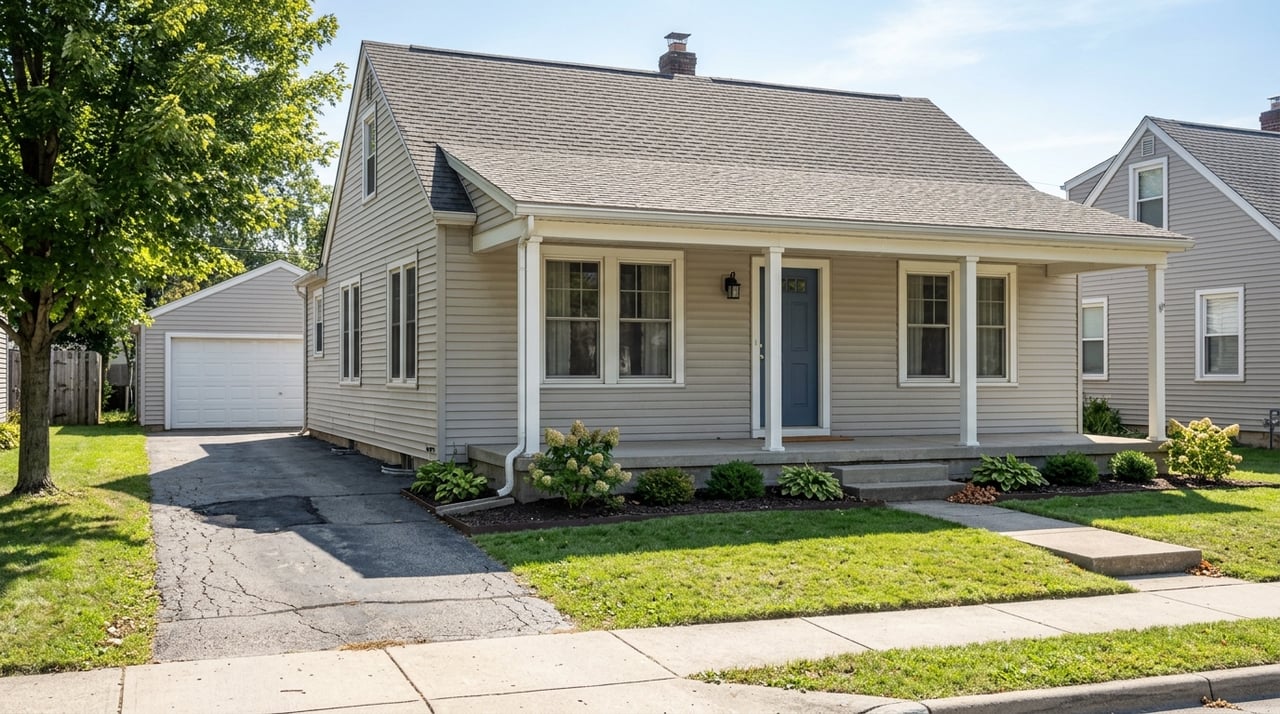
That tells you a lot about what investing here may look like. If you want to own in Delphi, you may spend more time evaluating single-family houses, duplexes, and small multifamily properties than larger apartment assets. For many small investors, that can be a good fit because the property type is familiar and the tenant pool may be looking for practical, everyday housing options.
It also means your due diligence should match the asset. A single-family rental has different turnover, maintenance, and utility considerations than a larger building. In a small market, those details can affect your returns more than a broad statewide average ever will.
Older homes can offer value and risk
One of the biggest factors in Delphi is age. Local data shows 531 housing units were built in 1939 or earlier, and 888 units were built before 1980. That means about 72.7% of Delphi’s housing stock predates 1980. Carroll County is similar, with about 70.1% of units built before 1980.
Older homes can create opportunity because they may be priced more accessibly or offer strong rental appeal after updates. But they can also bring higher repair risk. Roofs, plumbing, electrical systems, HVAC equipment, foundations, and sewer lines can all turn a decent-looking investment into a much more expensive one.
This is where a careful, education-first approach matters. Before you buy, make sure your numbers include realistic reserves for repairs and replacements. A property that looks cash-flow positive on a basic spreadsheet may feel very different after one major systems issue.
Pre-1978 homes need extra attention
If a home was built before 1978, you also need to think about lead-based paint rules. According to CDC guidance, homes built before 1978 are likely to have lead-based paint, and EPA and HUD disclosure rules apply to most housing built before 1978. For investors, that affects renovation planning as well as sale and lease disclosures.
That does not mean you should avoid older homes. It means you should go in with your eyes open. If you plan to improve a pre-1978 property, factor in lead-safe work practices, proper disclosure, and the time and cost that may come with those requirements.
Limited new supply may support existing rentals
Another part of Delphi’s story is limited new construction. Carroll County reported just 32 building permits in 2024. In a county with an owner-heavy housing base, that suggests new supply is not arriving at a rapid pace.
For rental owners, limited new supply can help support existing housing stock, especially if a property is clean, well-maintained, and priced correctly. It does not guarantee rent growth or easy leasing, but it does mean you may face less competition from large waves of brand-new inventory than in faster-growing markets.
How to underwrite a Delphi rental property
In a market like Delphi, simple underwriting usually beats flashy investing jargon. You want to know whether the property can hold up under real-world costs, not just best-case scenarios.
Focus on these basics:
- Expected monthly rent based on current local comps
- Property taxes
- Insurance costs
- Repairs and maintenance
- Vacancy allowance
- Property management fees if you will not self-manage
- Upfront renovation costs
- Larger capital reserves for older systems
If the property is older, be conservative. Delphi’s housing stock suggests that many rentals will need more maintenance planning than newer suburban inventory. It is better to be pleasantly surprised than financially stretched.
Local management and rent benchmarking options
If you do not plan to manage the property yourself, local and nearby operators can help you benchmark what is realistic. Delphi has a local rental operator, J.W. Rentals, which says it offers apartments, duplexes, houses, efficiency apartments, guest rooms and suites, retail or office space, and storage units. Nearby Lafayette-area firms like Distinctive Rental Properties, Sorola Properties, and B.W. Parks also present possible reference points for management or rent comparisons in the broader region.
Even if you plan to self-manage, it can still help to compare your assumptions against local operators. In a small market, getting the rent, condition level, and tenant expectations right from the start can save you time and money.
A smart way to evaluate opportunity
The best rental opportunities in Delphi are usually not the ones with the flashiest online listing. They are the ones where the numbers still make sense after you account for property age, true vacancy conditions, and realistic maintenance reserves.
If you are evaluating a house, duplex, or small multifamily property in Delphi, keep your process grounded. Look at local rents, inspect the condition carefully, question easy assumptions, and build in room for repairs. That kind of discipline is often what separates a workable rental from a stressful one.
When you want a local, education-first perspective on buying, selling, or evaluating investment property in Delphi and surrounding markets, Ryan Dilley is here to help.
FAQs
What makes Delphi different from a larger rental market?
- Delphi has a smaller, owner-heavy housing market with a strong share of single-family homes, so many rental opportunities are houses, duplexes, or small multifamily properties rather than large apartment buildings.
How should you read Delphi vacancy rates when evaluating rentals?
- Use caution with headline vacancy numbers because a large share of vacant units in Carroll County are seasonal or otherwise not part of the active for-rent inventory.
What is the median rent in Delphi, Indiana?
- In ZIP code 46923, the 2024 median gross rent was $947, while Carroll County reported a median gross rent of $890 in the 2020 through 2024 ACS period.
Why do older Delphi homes need more careful underwriting?
- Much of Delphi’s housing stock was built before 1980, which can increase the likelihood of larger repair items such as roofing, plumbing, electrical, HVAC, foundation, or sewer work.
What should you check before renovating a pre-1978 rental in Delphi?
- You should verify lead-safe renovation requirements and disclosure obligations, since homes built before 1978 are more likely to contain lead-based paint and may require additional compliance steps.